You must have regular cleaning scheduled according to risk factors, operational volume, allergen concerns, and regulatory checks, combined with verification documentation supporting food safety protocols, inspection results, and public health standards. The following sections describe critical cleaning system elements.
Important Highlights
- Sanitation technicians in Brampton cater to restaurants, grocery departments, commissaries, warehouses, bakeries, schools, mobile vendors, and allergen-sensitive operations.
- Cross-contamination elimination is maintained by disinfecting high-touch surfaces, food-contact equipment, kitchens, floors, drains, restrooms, and storage areas with zone-based workflows.
- Approved sanitizer dilution, compatibility, and contact time are verified by approved vendors, with conclusion filed via samples, inspections, and action records.
- Maintenance plans must follow risk, throughput, switches, incidents, and standards, with daily, weekly, and periodic duties assigned by zone.
- Insurance, color-categorized equipment, hazard analysis knowledge, health regulatory knowledge, safety training preparation, references, and assessment-ready cleaning paperwork are vital supplier qualifications.
Brampton Establishments That Need Food Safety Cleaning: Which Ones?
Brampton establishments that process, store, prepare, package, or distribute food require hygiene cleaning. Implement it if your business is regulated by health reviews, food regulations, or HACCP protocols. The obligation covers dining establishments, employee cafes, food distributors, market sections, meat shops, fish counters, local shops, and commercial kitchens.
You'll additionally need compliant food safety cleaning in distribution warehouses, production plants, frozen storage areas, commercial bakeries, educational meal programs, banquet venues, and food delivery services. Mobile and temporary operations apply too, like food trucks, event sellers, and temporary stalls. Should your employees handle raw materials, divide prepared dishes, warm finished meals, or maintain allergen storage, your venue requires established hygiene documentation. In Brampton, sanitation continues to be compulsory; it represents regulatory, business, and safety adherence.
What Do Brampton Cleaning Professionals Handle?
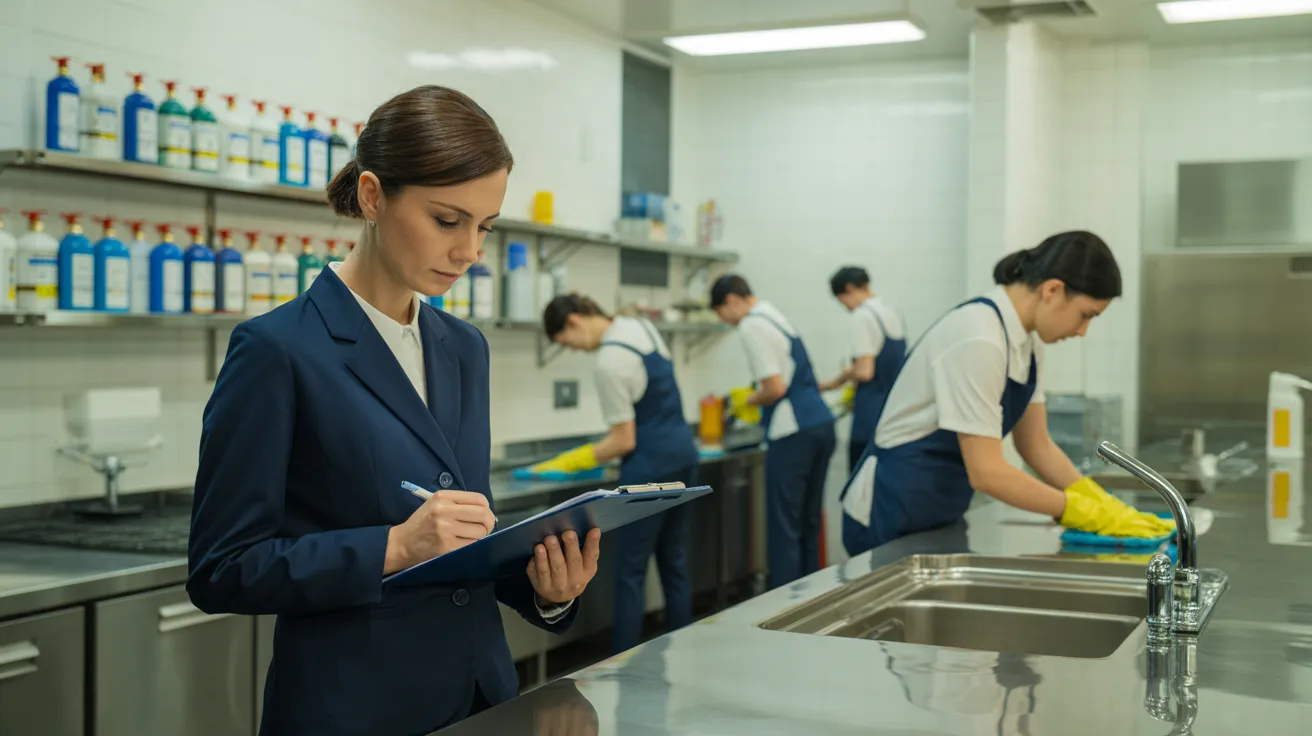
Professional cleaning services specializing in Brampton sanitize touched surfaces, food preparation areas, ground surfaces, and sanitary facilities in compliance with food safety regulations. Emphasis on these spaces occurs because they pose maximum contamination danger, potential for accidents, and possible regulatory violations.
If you comprehend their cleaning services, you'll be able to confirm your operation satisfies all operational and regulatory compliance needs.
High-Touch Surface Cleaning
establish how periodically each point is cleaned
verify that sanitization was successful and document corrective actions if results come beyond specified thresholds
Kitchens, Floors, and Restrooms
Professional cleaners in Brampton concentrate on kitchens, floors, and restrooms given that each location involves distinct contamination control, slip-and-fall, and public health requirements. In industrial kitchens, you need grease removal from cooking stations, appliance surfaces, drain systems, preparation areas, and backsplashes to reduce bacterial growth and pest activity.
Floor care that is recorded should also be anticipated. Technicians scrub and extract buildup from tile grout, ceramic surfaces, and vinyl floors, then apply proper moisture management so you can reduce slip incidents and meet regulatory standards. They also handle entryways where moisture and debris migrate indoors.
For restroom sanitation, cleaners sanitize high-touch surfaces, bathroom fixtures, stall dividers, supply dispensers, and trash receptacles, then restock supplies and control odours. They also maintain restaurant cleaning supply rooms where product storage, sink cleanliness, and drain systems impact daily sanitation standards and worker protection.
How Food Safety Cleaning Benefits Brampton Operations
To comply with health code requirements and succeed in audits, Brampton establishments must follow appropriate cleaning protocols. You also minimize cross-contamination by cleaning and sanitizing food-contact surfaces, equipment, and high-touch areas correctly. Most importantly, you safeguard public health by lowering the risk of foodborne illness in your facility.
Sanitary Standards Adherence
Brampton food companies must comply with mandatory safety protocols, so hygiene maintenance is critical to adhering to health codes, ensuring the safety of customers, and sidestepping penalties. You must maintain clean food preparation areas, recorded sanitation plans, appropriate product handling, and verifiable staff procedures that align view details with municipal and provincial inspection expectations.
When cleaning standards weaken, citations, corrective orders, loss of reputation, and service interruption from subsequent audits or enforcement actions become risks.
Cross-Contamination Avoidance
Following health code standards depends on your ability to prevent cross-contamination in daily food handling and cleaning. You should isolate raw items from prepared foods, disinfect work areas after use, and maintain separation of cleaning products from food. Well-defined guidelines decrease contamination chances and support consistent compliance during inspections.
You should establish allergen separation to keep priority allergens from contacting shared surfaces, containers, or equipment. Employ separate boards, labeled implements, and strict utensil labeling so staff don't mix items during preparation or service. Require handwashing after handling uncooked proteins, shellfish, egg items, or allergen products. Change cleaning rags frequently, and check disinfectant potency using test kits. When you train staff to follow these controls each work period, you create a cleaner, safer operation that satisfies Brampton's safety standards consistently.
Public Health Protection
Should cleaning standards collapse, you don't simply risk a failed inspection—you increase the potential of foodborne illness harming customers, staff, and the wider Brampton population. You also weaken your role in protecting public health, especially in high-traffic food premises where pathogens travel quickly through surfaces, equipment, and touchpoints.
You need cleaning protocols that eliminate contaminants, sanitize correctly, and verify results. That requires adhering to exposure periods, using approved disinfectants, documenting schedules, and training staff to meet health-unit expectations. These controls support disease prevention by lowering microbial loads before they reach food or hands. In Brampton, rigorous cleaning protects vulnerable populations, limits outbreak potential, and enables you to show proper care. When you clean to standard, you don't just meet regulations—you actively reduce risk and support safer food service citywide.
In What Ways Does Cleaning Help Achieve Food Safety Compliance?
Establishing comprehensive cleaning schedules improves food safety compliance by lowering contamination exposure, limiting pathogen development, and keeping your facility aligned with sanitation requirements under HACCP-based programs and public health regulations. You ensure that food-contact surfaces stay visibly clean and microbiologically controlled, enabling documented preventive controls and inspection readiness.
Diligent cleaning additionally solidifies allergen mitigation by clearing residues that can lead to undeclared allergen exposure. When you combine established sanitation practices with standards training, your staff can implement uniform procedures, use approved chemicals properly, fill out documentation thoroughly, and address variations in advance of issues intensify. Ongoing cleaning promotes traceability, validates remediation efforts, and proves due diligence throughout audits. It also helps you maintain quality assurance, maintain compliance standards, and minimize the risk of punitive measures, market recalls, formal complaints, and unnecessary public health risks.
What's the Best Time to Plan Commercial Cleaning?
high-volume production periods, product changeovers, spill events
Use every week or monthly schedules
Finding Quality Brampton Cleaning Experts: A Guide
Evaluate providers first by sanitation compliance standards rather than cost. You must ensure each provider understands CFIA, public health, and HACCP requirements for your business. Request proof of insurance, WHMIS compliance, staff training documentation, and supervision methods. Check technician awareness of contamination prevention, chemical safety, and documented sanitation practices.
Additionally, you need to evaluate service dependability and accountability. Obtain references from food facilities in Brampton, then review service speed, corrective measures, and communication practices. Verify the company supports supplier audits and can deliver compliance-ready records when inspectors or external parties need proof. Verify equipment upkeep, colour-coded tools are applied correctly, and location-specific dangers are identified. A capable service ensures compliance, product quality, and your reputation.
What's included in a sanitation cleaning strategy?
Document a framework that defines every sanitation task, standard, and responsibility before production begins. You should include cleaning frequencies, approved chemicals, dilution rates, contact times, tools, and verification methods for each area, surface, and device. Remember to add pre-operational inspections, corrective actions, and employee training requirements.
Your strategy should also address cross-contamination controls, waste handling, pest-prevention measures, and documented schedules for restrooms, drains, floors, and food-contact areas. Specify how you'll separate raw and ready-to-eat processes, facilitate ingredient tracking, and maintain accurate allergen labeling through validated cleaning between product changes. You should establish accountability, keep signed records, and assess results against regulatory standards, HACCP controls, and customer requirements. When gaps appear, update procedures immediately and instruct staff.
Regular Posed Questions
Are cleaning services offered for nighttime operations in Brampton properties?
Yes, you can arrange sanitation coverage to support nighttime operations in Brampton facilities. You'll coordinate nighttime cleaning around operational windows, security measures, and staffing requirements. Services generally map overnight logistics to minimize interruption, ensure compliance, and document completed tasks. You should verify response times, supervision, lockout procedures, and waste handling before beginning service. If you operate controlled environments, you'll also want cleaning records that enable audits and compliance verification.
Do Brampton cleaning experts provide emergency spill response services?
Yes, you can find many Brampton cleaning professionals offering spill containment services. They manage hazardous materials, evaluate risks, contain affected areas, and execute rapid cleanup to minimize risk and limit operational impact. You should verify response times, certifications, protocols, and disposal methods. If your facility needs compliance, choose a service that logs events, follows procedures, and ensures verification.
Are eco-friendly disinfectants secure for food preparation areas?
In essence, plant-based sanitizers prove safe for food-contact surfaces provided you buy solutions certified for food use that satisfy compliance requirements. Validate contact duration, mixing proportions, and rinse protocols before use. Botanical formulations decrease toxic chemical contact, although you should obtain confirmation of performance against specific pathogens. To keep surfaces without residue, adhere to precise manufacturer instructions and verify the disinfectant adheres to food industry regulations.
Can maintenance plans be modified for production fluctuations?
Absolutely, maintenance plans enable modification for seasonal variations. Adapt frequencies, personnel, cleaning agents, and testing procedures to align with operational cycles while sustaining regulatory compliance. Minimize production downtime through planning disinfection surrounding changeovers, peak volumes, and usage patterns. Additionally, update SSOPs, staff education, and monitoring protocols to account for periodic risks, novel allergens, or higher contamination levels. Periodic assessments maintain your program functional.
Will commercial cleaners train your staff on sanitation best practices?
Certainly, commercial cleaners train your employees on hygiene protocols. You obtain staff training on correct chemical practices, processing times, cross-contamination prevention, equipment disassembly, and documentation procedures. They typically align instruction with HACCP, GMP, and CFIA or regional health bodies requirements. Many execute sanitation audits to verify compliance, identify gaps, and reinforce corrective actions. This enables you to maintain consistent procedures, satisfy audits, and minimize foodborne pathogen risks daily.
Conclusion
Through working with Brampton commercial cleaning and food safety specialists, you accomplish much beyond organizing—you keep your operation prepared for inspections and your procedures meet requirements. From production floors to kitchens, all maintained surfaces and kept corners help prevent pest problems and prevent significant costs. Through booking service at proper intervals and adhering to a comprehensive cleaning program, you safeguard employees, your patrons, and your standing. Within strict regulatory frameworks, proper sanitation must be a priority—they are fundamental to success.